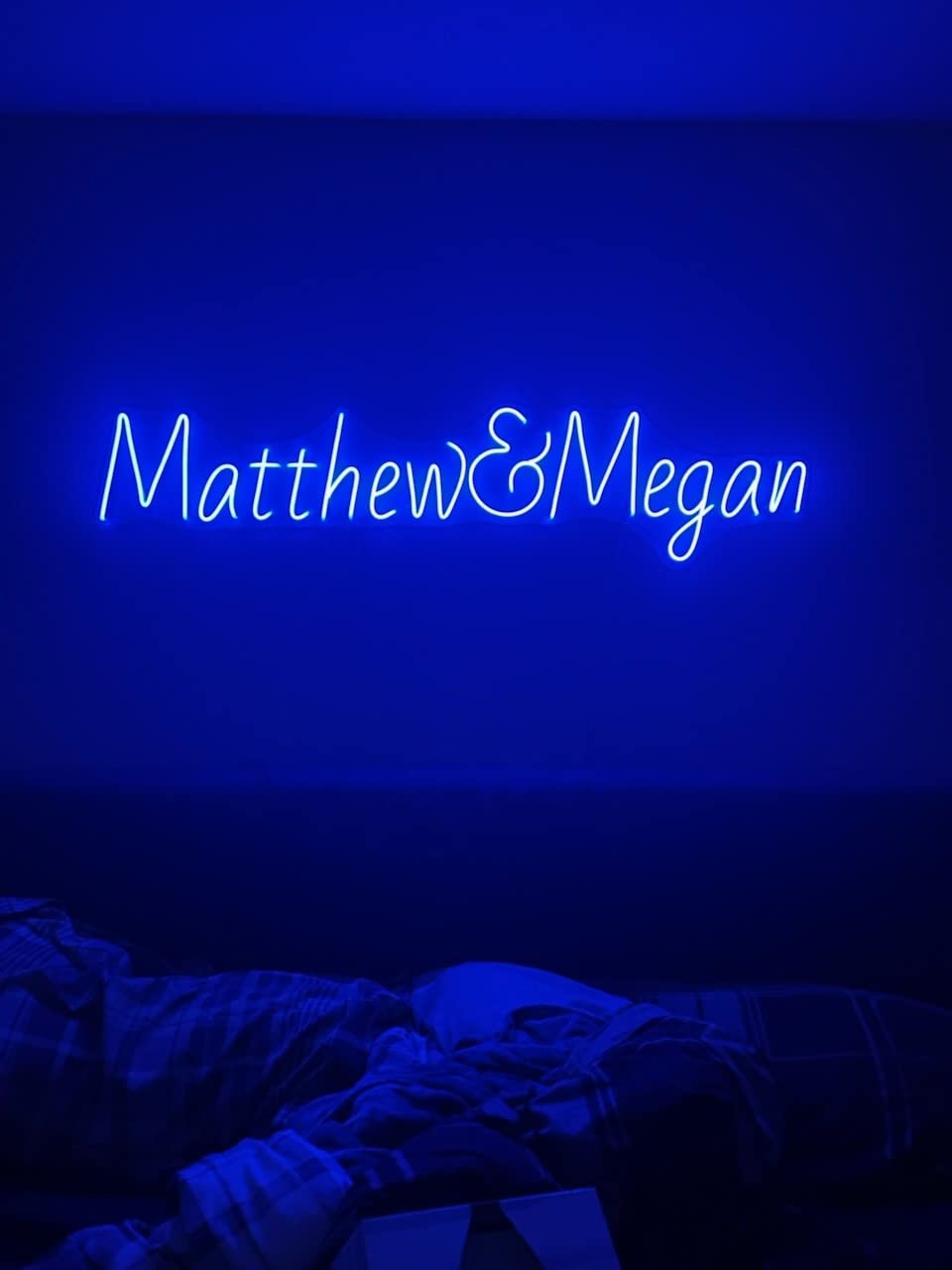
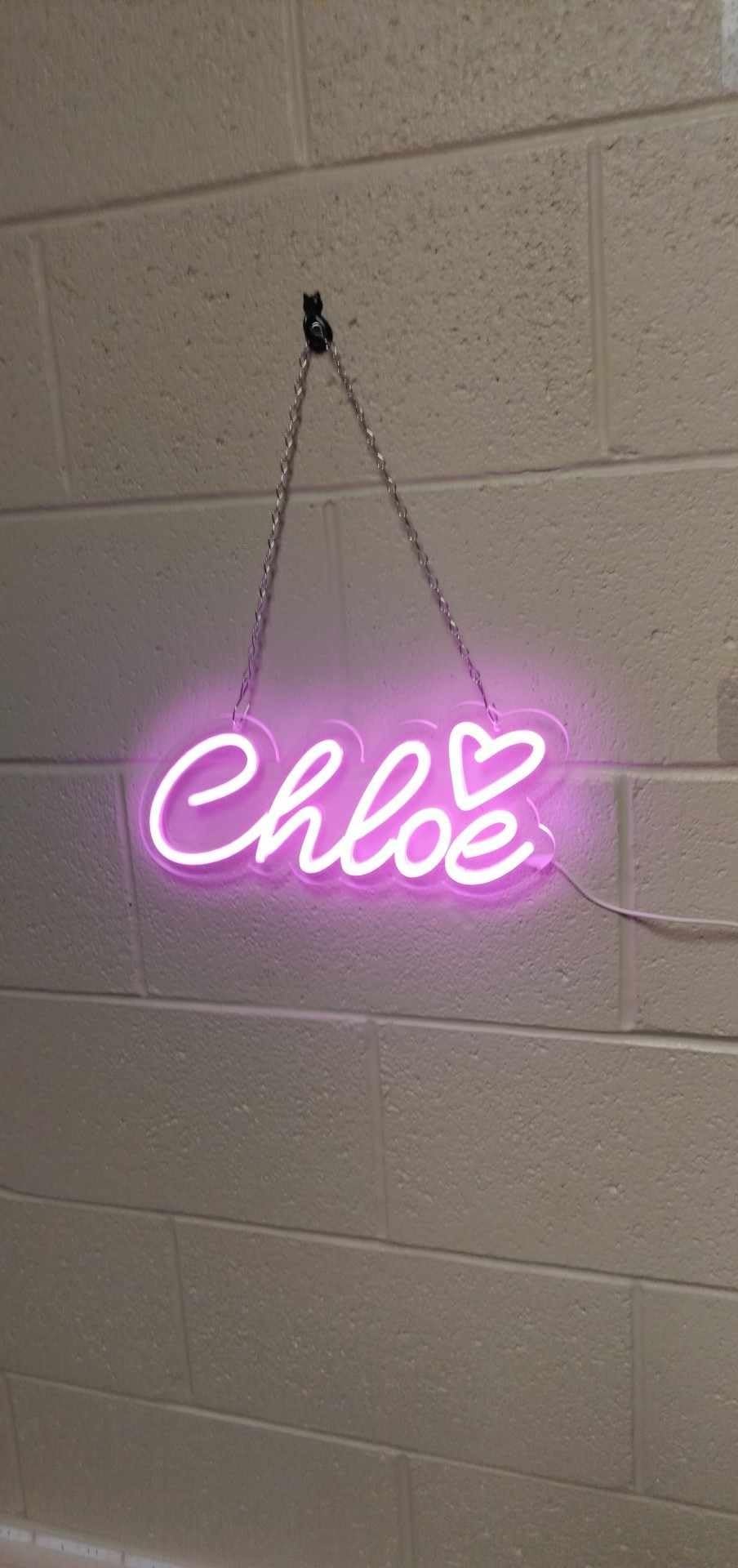
.png)

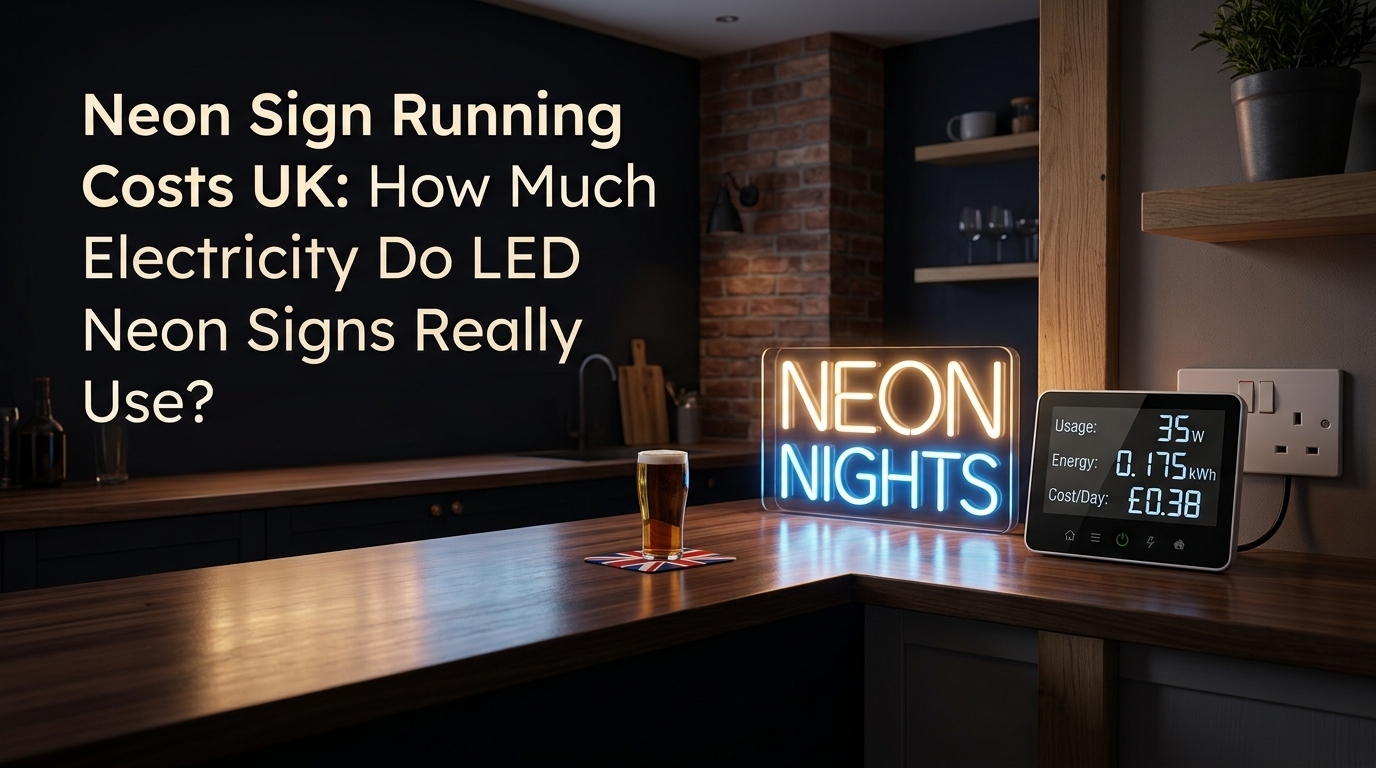
A glowing neon sign can transform a bedroom, wedding venue, restaurant, shopfront or home bar, but there is one question many UK buyers ask before ordering: how much will it actually add to the electricity bill?
The good news is that modern LED neon signs generally use far less electricity than many people expect. For a typical small or medium sign, the neon sign running cost can be only a few pence per day, depending on its wattage, how long it is switched on and the electricity tariff you pay.
For a realistic UK example, a 30-watt LED neon sign running for five hours each evening would use 0.15 kWh per day. Using the Ofgem electricity unit rate of 26.11p per kWh for the July–September 2026 price-cap period, that works out at about 3.9p per day, £1.17 per month or £14.31 per year.
So, are neon signs expensive to run? Usually, no. The actual cost depends much more on the sign's power consumption and usage pattern than simply on its size or appearance.
What Is the Average Neon Sign Running Cost in the UK?
The simplest way to understand LED neon sign electricity cost is to look at wattage rather than the word "neon" itself.
Modern custom signs are often made using flexible LED neon rather than traditional glass neon tubing. LED neon uses LEDs inside a flexible silicone-style tube to create the familiar continuous neon appearance. Because the technology is different, its electricity consumption can be relatively low.
Current UK examples show that LED neon signs can range from small signs using around 15 watts to larger, denser signs using considerably more power. One recent UK industry example gives approximately 15W for a small sign, 25–50W for a medium sign and up to around 120W for a large or particularly dense design. These figures are examples rather than universal specifications, because the actual wattage varies from sign to sign.
Using 26.11p per kWh as an illustrative electricity rate, the approximate running costs look like this:
| Sign power | 5 hours/day | 8 hours/day | 12 hours/day |
|---|---|---|---|
| 15W | £7.15/year | £11.44/year | £17.16/year |
| 30W | £14.31/year | £22.90/year | £34.32/year |
| 50W | £23.83/year | £38.25/year | £57.12/year |
| 100W | £47.65/year | £76.28/year | £114.36/year |
| 120W | £57.12/year | £91.54/year | £137.23/year |
These figures are estimates based on continuous operation at the stated wattage and the cited electricity unit rate. Your actual cost will depend on your tariff, the sign's real power consumption and how many hours you use it.
The important takeaway is that even a sign running for several hours every day can cost surprisingly little to power.
How Much Electricity Does a Neon Sign Use?
The amount of electricity a neon sign uses depends primarily on its wattage and how long it operates.
A 15W LED neon sign consumes 0.015 kWh for every hour it runs. A 30W sign consumes 0.03 kWh per hour, while a 50W sign consumes 0.05 kWh per hour.
For example, suppose you have a 30W sign in a bedroom and leave it on for five hours every evening:
30W ÷ 1,000 × 5 hours = 0.15 kWh per day
At 26.11p per kWh:
0.15 × £0.2611 = approximately £0.039 per day
That is about 3.9p per day.
Over a full year:
£0.039 × 365 = approximately £14.31
This is why looking only at the sign's appearance can be misleading. A large-looking acrylic sign does not automatically consume a large amount of electricity. What matters is the electrical power required by the LEDs and driver.
How Much Power Does an LED Neon Sign Use?
There is no single wattage that applies to every LED neon sign.
A small bedroom name sign may use considerably less power than a large business logo or shopfront installation. The length of LED neon tubing, design density, brightness and configuration can all affect electricity consumption.
As a general illustration, recent UK running-cost data puts small signs at around 15W, medium signs around 25–50W and large or dense signs at up to approximately 120W.
This gives you a useful starting point:
Small LED neon signs: around 15W
Medium LED neon signs: around 25–50W
Large or dense LED neon signs: potentially 100W or more
However, these should not be treated as guaranteed specifications. If you are buying a particular sign, the best figure to use is the wattage supplied by the manufacturer or shown on the power adapter/specification.
This distinction is important because two signs that look similar from the front can have different power requirements depending on how much LED tubing they contain.
What Is the Formula for Calculating Neon Sign Electricity Cost?
You do not need complicated equipment to estimate your neon sign electricity consumption.
The basic formula is:
Watts ÷ 1,000 × hours used × electricity price per kWh = electricity cost
For example, imagine a 40W sign that runs for six hours every day, with electricity costing 26.11p per kWh.
First, convert watts into kilowatts:
40 ÷ 1,000 = 0.04 kW
Then calculate daily electricity use:
0.04 × 6 = 0.24 kWh
Then calculate the daily cost:
0.24 × £0.2611 = approximately £0.063
So the sign costs roughly 6.3p per day.
Over a year:
£0.063 × 365 = approximately £23
The same formula works for almost any LED neon sign. Simply replace the wattage, hours and electricity rate with your own figures.
What Electricity Rate Should You Use for a UK Calculation?
Electricity prices change, so an online calculation can become outdated if it uses an old unit rate.
For this article, the example calculations use Ofgem's published electricity unit rate of 26.11p per kWh for 1 July to 30 September 2026 under the energy price cap. Ofgem lists a rate of 26.32p per kWh for the following October–December 2026 period.
Your personal electricity rate may be different because you could be on a fixed tariff, a different variable tariff or a multi-rate tariff such as Economy 7. Ofgem also notes that multi-rate tariffs can have different electricity prices depending on the time of day.
For the most accurate neon sign kWh cost UK calculation, check the electricity unit price shown on your latest bill and use that number instead of a generic national figure.
What Affects LED Neon Sign Running Costs?
The electricity cost of LED neon sign lighting is not determined by size alone. Several factors can change how much power a particular sign consumes.
Sign size and amount of LED neon
Generally, a sign containing more LED tubing will require more electricity than a small, simple design.
A short name or symbol may use only a small amount of tubing. A large two-line phrase, detailed logo or elaborate script design can contain significantly more illuminated material.
That does not mean a larger sign will automatically be expensive to run. It simply means you should check its rated wattage rather than estimating consumption from its physical dimensions.
Brightness
Brightness can also affect power consumption, particularly when a sign is dimmable.
If your sign has a compatible dimmer, reducing the brightness can reduce the amount of power it consumes. It can also create a softer appearance that works better in bedrooms, restaurants, bars and evening event spaces.
For example, you may not need maximum brightness from a decorative sign in a dimly lit bedroom. A lower brightness setting can provide the atmosphere you want while reducing energy use.
How many hours you use it
This is one of the biggest factors affecting annual running costs.
A sign used for two or three hours each evening will consume much less electricity than the same sign operated for 12 hours every day.
For a business, however, longer operating hours may make sense because the sign is performing a practical marketing or branding function. A shop, restaurant or salon may keep a sign illuminated throughout opening hours, while a bedroom sign may only be used in the evening.
The design itself
A compact word may require less illuminated tubing than a large, detailed logo.
This is one reason why wattage is a more useful measurement for calculating electricity consumption than simply saying that a sign is "small", "medium" or "large".
Your electricity tariff
Two households can have identical neon signs but different running costs if they pay different rates for electricity.
Someone paying 22p per kWh and someone paying 30p per kWh will not have the same annual cost for the same sign.
If you want an accurate estimate, always use your own unit rate.
LED Neon vs Traditional Glass Neon: Which Uses More Electricity?
It is important to distinguish LED neon from traditional glass neon.
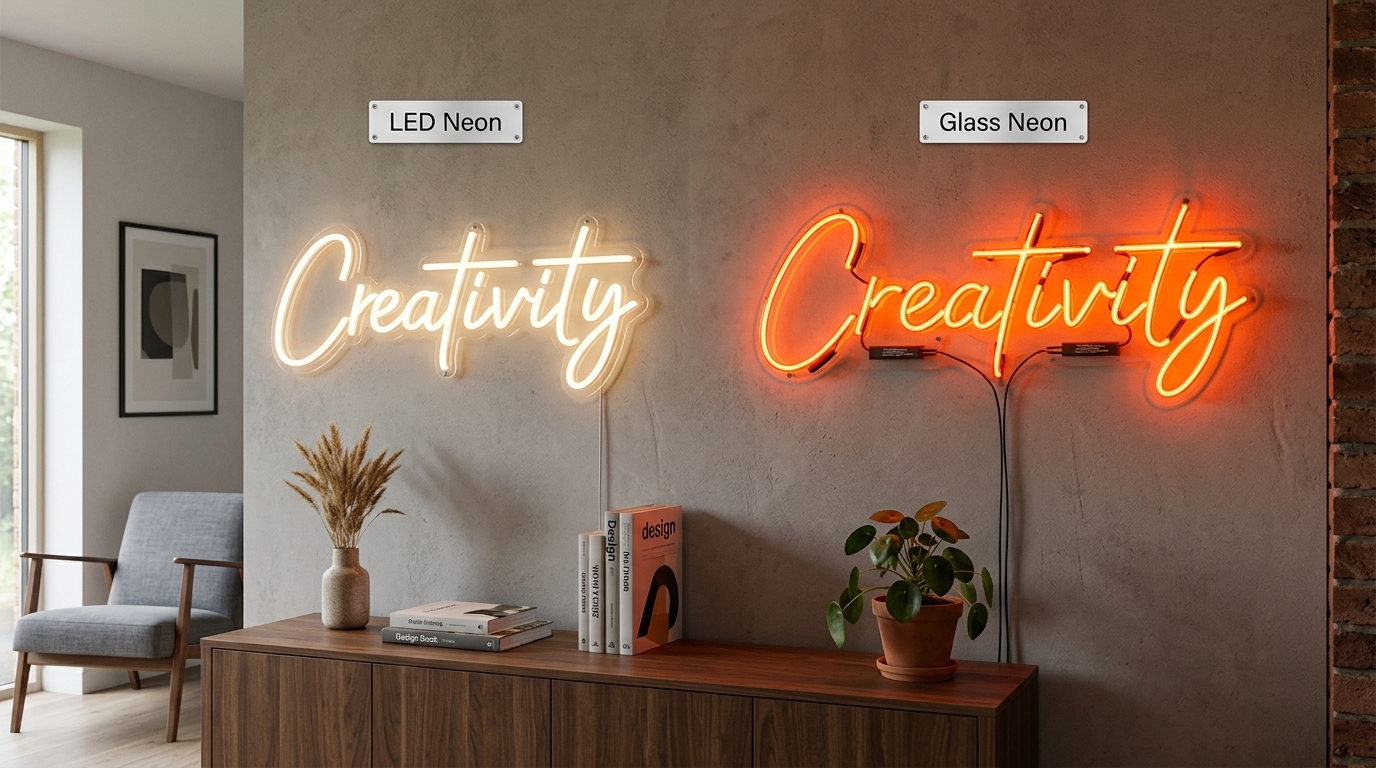
Traditional neon signage uses glass tubes filled with gas and typically requires high-voltage electrical equipment. LED neon uses LEDs housed inside flexible tubing and is generally designed around much lower-voltage electrical systems.
Modern LED neon has become popular for custom signs partly because it can offer lower power consumption, greater flexibility in design and a more practical solution for many homes and businesses. UK sign suppliers also commonly position LED neon as a lower-energy alternative to traditional glass neon.
However, it would be misleading to say that every LED sign uses less electricity than every glass neon sign. Actual consumption depends on the size, design and specifications of the individual sign.
The better comparison is like-for-like: compare the wattage of the LED sign with the power requirements of the traditional neon sign you are considering.
Is LED Neon Cheaper to Run Than Other Lighting?
For many decorative applications, LED neon can be an economical lighting option.
Consider a 30W LED neon sign operating for five hours every evening. At the example UK electricity rate used above, it costs roughly £14 a year to operate.
That is a useful way to put the electricity cost into perspective. The sign can provide a visible decorative feature every evening without becoming a major part of the household electricity bill.
For businesses, the calculation can be even more interesting. A sign that is visible to customers for thousands of hours per year may have a relatively small electricity cost compared with the value of the branding, atmosphere or visibility it provides.
The important point is not that LED neon is "free" to operate. It is that the electricity component of owning a modern LED neon sign can be relatively modest.
How Much Does It Cost to Leave a Neon Sign On Overnight?
Leaving an LED neon sign on overnight does not necessarily mean a large electricity bill.
Imagine a 15W sign running for 12 hours overnight.
The calculation is:
15 ÷ 1,000 × 12 = 0.18 kWh
At 26.11p per kWh:
0.18 × £0.2611 = approximately 4.7p per night
If operated every night for a year, that would be approximately £17.16 at the same electricity rate.
A 30W sign under the same conditions would use twice as much electricity, costing roughly 9.4p per night, or about £34.32 per year.
Whether you should leave a particular sign on overnight depends on its intended use, installation and manufacturer's guidance. If you simply want it illuminated during specific hours, a plug-in timer can automate the schedule so you do not have to remember to switch it off.
How to Reduce Your Neon Sign Electricity Cost
The easiest way to control LED neon running costs is to manage how and when the sign operates.
You do not necessarily need to compromise on the appearance of the sign. A few practical choices can keep consumption under control.
Choose the right size
Buy a sign that is large enough to make the intended visual impact, but not unnecessarily oversized.
A bedroom name sign does not need the same dimensions as a restaurant feature wall. Matching the sign to the space can reduce both the purchase price and potential electricity consumption.
Use a timer
If the sign only needs to be illuminated during certain hours, a timer can automatically control its operating schedule.
For example, a sign in a shop window could be scheduled to switch on in the evening and turn off after the business closes or after foot traffic decreases.
Use a dimmer where appropriate
If your sign supports dimming, you can lower the brightness when full illumination is unnecessary.
This can be particularly useful for home interiors, hospitality venues and evening events where a softer glow may actually look better.
Check the wattage before buying
Do not rely on assumptions such as "all LED neon signs are low wattage".
Ask for the sign's actual power specification. This gives you a much more reliable basis for calculating the annual electricity cost.
Consider how the sign will actually be used
A sign used for three hours every evening has a very different annual energy requirement from one operating for 12 hours a day.
Think about your real usage pattern before calculating the cost.
A Realistic Example: Bedroom Neon Sign
Suppose you want a 15W LED neon name sign for a bedroom and plan to use it for three hours every evening.
Daily consumption:
15 ÷ 1,000 × 3 = 0.045 kWh
Daily electricity cost at 26.11p/kWh:
0.045 × £0.2611 = approximately 1.2p
Annual cost:
£0.0117 × 365 = approximately £4.27
So a small bedroom sign could cost only around £4–£5 per year to operate under these assumptions.
The actual figure will depend on the sign's power draw and your electricity tariff, but this illustrates why the electricity cost of a small LED neon sign is often much lower than people initially expect.
A Realistic Example: Business Neon Sign
Now consider a larger 100W sign used by a café or shop for 12 hours each day.
Daily consumption:
100 ÷ 1,000 × 12 = 1.2 kWh
Daily electricity cost:
1.2 × £0.2611 = approximately 31.3p
Annual electricity cost:
£0.313 × 365 = approximately £114
That is considerably more than the bedroom example, but the sign is also operating for four times as many hours and consuming more than six times the power.
For a business, the correct question is therefore not simply "Is this sign expensive to run?" Instead, consider what the sign is doing for the business during those operating hours.
A branded neon sign can contribute to storefront visibility, interior atmosphere, social-media-friendly design and customer recognition while using a relatively small amount of electricity compared with many other commercial appliances.
Does the Power Adapter Tell You How Much Electricity the Sign Uses?
The power adapter is one of the most useful places to look when estimating consumption, but there is an important detail to understand.
An adapter's wattage or output rating can indicate the maximum amount of power it is designed to provide. It does not always mean the sign continuously consumes that exact amount.
For example, if a power supply is rated to provide up to 60W, that does not necessarily mean the sign uses 60W every minute it is switched on.
For a more accurate calculation, use the manufacturer's stated power consumption where available. If that information is not provided, the adapter rating can be used as a conservative estimate, but the resulting running-cost figure may be higher than the sign's actual consumption.
For businesses operating several signs, getting the actual wattage for each sign is especially useful because you can calculate the combined electrical load rather than guessing from the physical size of the installations.
Are LED Neon Signs Energy Efficient?
LED neon signs are generally considered an energy-efficient way to create a bright illuminated display compared with older lighting technologies and traditional high-voltage neon applications.
Their efficiency comes from using LEDs as the light source rather than relying on the electrical operation of gas-filled glass tubes.
But energy efficiency should be considered alongside the complete product lifecycle. The materials used, manufacturing, transport, electronics, expected lifespan and eventual disposal all contribute to the broader environmental impact.
For someone choosing a sign primarily because they want decorative or branded lighting, however, the day-to-day electricity consumption of a properly specified LED neon sign is usually relatively modest.
What Is the Cheapest Way to Run a Neon Sign?
The cheapest way to operate a neon sign is to combine a suitably sized sign with sensible operating hours.
You do not need to keep a sign at maximum brightness for 24 hours a day to enjoy its visual impact. A timer can restrict operation to the hours when the sign is actually useful, while a compatible dimmer can reduce brightness when full output is unnecessary.
The most important step is still to start with the correct wattage. A low-wattage sign that meets your design requirements will naturally cost less to operate than a higher-powered sign used for the same number of hours.
If you are ordering a custom sign, ask the supplier for its expected wattage before making your final decision. This allows you to compare both the purchase price and the long-term running cost.
How to Calculate Your Own LED Neon Sign Running Cost
If you already own a sign, you can calculate its estimated running cost in a few simple steps.
First, find the sign's wattage. This may be provided by the manufacturer, on the product specification or through the power supply information.
Next, work out how many hours you use the sign each day.
Then check your electricity unit price in pence per kWh.
Finally, use this formula:
(Watts ÷ 1,000) × hours per day × electricity price per kWh = daily running cost
To calculate the annual cost, multiply the daily figure by the number of days you expect to use the sign.
For example, with a 50W sign running six hours per day at 26.11p/kWh:
50 ÷ 1,000 × 6 × £0.2611 = £0.0783 per day
That is approximately 7.8p per day, or around £28.57 per year if used every day.
This calculation is simple enough to repeat whenever your electricity tariff changes.